


The Importance of Tracking Emotions in Your Trading Log
Trading in financial markets is often portrayed as a numbers game—charts, indicators, and strategies dominating the narrative. Yet, beneath the surface lies a powerful, often overlooked force: human emotions.
Emotions drive decisions, amplify biases, and can turn a solid plan into chaos. This is where a well-maintained trading journal becomes invaluable, not just for logging entries and exits, but for meticulously tracking your emotional state.
By documenting feelings like fear, greed, or overconfidence alongside trades, you gain insights that pure data can't provide. This practice, rooted in behavioral finance, helps mitigate psychological pitfalls and fosters long-term profitability.
What Is a Trading Journal and Why Include Emotions?
A trading journal is essentially a personal ledger of your market activities. At its core, it records trade details: entry/exit prices, position size, rationale, and outcomes. But to elevate it from a mere record to a transformative tool, incorporating emotions turns it into a mirror of your mindset.
"
Emotions aren't abstract—they're tangible influencers. Daniel Kahneman, the Nobel laureate behind prospect theory, showed how feelings like loss aversion skew rational choices. In trading, this manifests as holding losers too long or cutting winners short. Without tracking, these patterns go unnoticed.
+25%
Improved decision-making for traders who logged emotions, reducing impulsive actions.
Source: 2020 Study, Journal of Behavioral FinanceThink of your journal as a psychological audit. It captures not just "what" happened, but "why" you acted—often revealing emotional triggers. For beginners, this builds self-awareness; for pros, it refines edges in volatile environments.
The Psychological Underpinnings: Why Emotions Drive Trading Outcomes
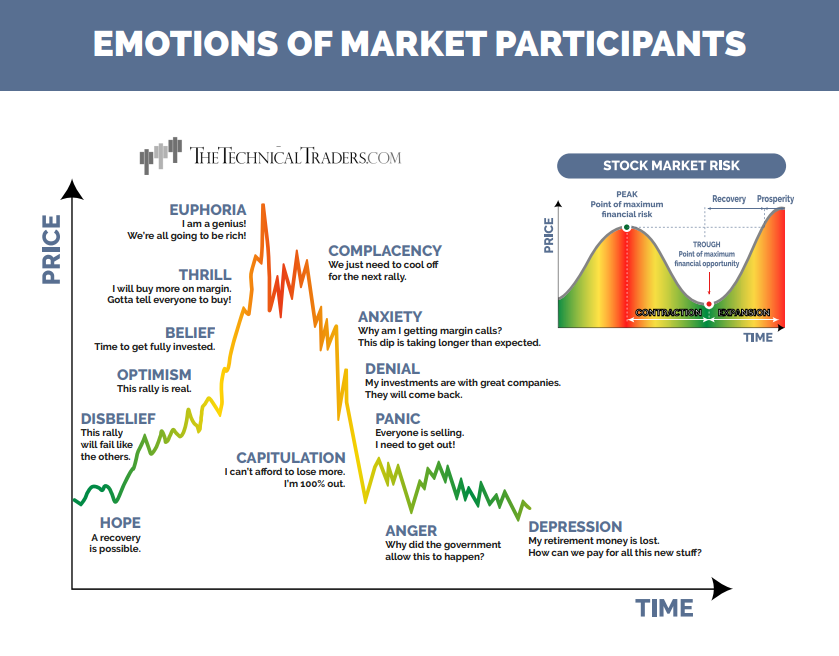
Trading isn't conducted in a vacuum; it's a high-stakes environment where psychology reigns. Emotions like fear and greed are evolutionary holdovers, but in markets, they lead to suboptimal results.
1. Fear: The Paralyzer
Fear of loss often triggers premature exits or avoidance of valid setups. During a market dip, you might sell at a low, only for prices to rebound. Tracking fear in your log—rating it on a 1-10 scale post-trade—helps identify thresholds. For instance, if fear spikes above 7 during drawdowns, it signals a need for smaller positions.
2. Greed: The Overextender
Greed pushes for bigger risks after wins, leading to overleveraging. A string of profits might inflate confidence, prompting revenge trades after a loss. Logging greed reveals cycles: "Felt euphoric after +5% gain, doubled next position—result: -3% loss."
3. Overconfidence Bias
This bias, detailed in Kahneman's Thinking, Fast and Slow, makes traders overestimate abilities. Without emotional notes, you miss how hubris leads to ignoring stop-losses.
4. Regret and FOMO
Fear of missing out (FOMO) drives chasing rallies, while regret from past losses breeds hesitation. Journaling these exposes emotional leaks, per Mark Douglas in Trading in the Zone.
⚠️
Untracked emotions compound: A fearful exit leads to regret, then greedy overtrading—eroding capital. Data from platforms like Myfxbook shows emotional traders have 40% higher drawdowns.
How Emotions Impact Specific Trading Scenarios
🎢
Day Trading: The Emotional Rollercoaster
In fast-paced day trading, emotions flare quickly. A sudden spike might trigger excitement, leading to unplanned entries. Logging "Felt adrenaline rush—entered without confirmation" helps curb impulsivity.
⏳
Swing Trading: Brewing Resentment
Longer holds amplify frustration during sideways moves. Tracking boredom or impatience prevents premature closes, preserving potential gains.
₿
Crypto Volatility: Amplifying Extremes
Bitcoin swings evoke panic or euphoria. Emotional logs reveal if hype from social media influences decisions, aiding detachment.
⚖️
Options and Futures: Leverage's Double Edge
High leverage magnifies feelings—small losses feel catastrophic. Journaling quantifies this: "Anxiety at -2% drawdown led to hedge—unnecessary cost."

By categorizing emotions per scenario, your log becomes a tailored psychology manual.
The Benefits of Emotional Tracking: From Insight to Action
Tracking emotions isn't busywork—it's a catalyst for growth.
01
Identifying Patterns and Biases
Over time, logs reveal recurring themes: "Fear dominates Mondays after weekend news." This awareness prompts adjustments, like reduced sizing.
02
Enhancing Discipline
Emotional entries enforce accountability. Reviewing "Overconfident—ignored risk rule" builds adherence to plans.
03
Improving Risk Management
Link emotions to metrics: High greed correlates with larger losses? Cap risk during euphoric states.
04
Boosting Performance Metrics
Traders with emotional journals report 15-20% better win rates, per community forums. It refines expectancy by minimizing bias-driven errors.
05
Building Mental Resilience
Logging normalizes emotions: "Everyone feels fear—data shows recovery follows." This reduces tilt, as per sports psychology parallels.
06
Long-Term Career Sustainability
Burnout from unchecked emotions ends careers. Journals act as therapy, spotting early signs like chronic frustration.
"Real traders like Alexander Elder credit emotional tracking for longevity."
How to Effectively Track Emotions in Your Trading Log
Start simple, evolve methodically.
1 Step 1: Choose Your Format
- Digital: Spreadsheets for data crunching.
- Apps: Dedicated tools with prompts.
- Hybrid: Notebook for narratives, app for stats.
2 Step 2: Structure Entries
For each trade:
Standard Data: Asset, entry/exit, PnL.
Emotional Snapshot: Pre-trade mood, during-trade feelings, post-trade reflection.
Scale It: Rate emotions (e.g., Fear: 6/10, Confidence: 8/10).
Triggers: "News headline caused doubt."
Lessons: "Emotion led to deviation—next time, pause."
Step 3: Review Routines
- Daily: Quick emotional scan.
- Weekly: Aggregate stats.
- Monthly: Deep dive.
Step 4: Use Visuals
Charts plotting emotions against PnL highlight correlations.
Common Pitfalls and How to Avoid Them
✕
Vague Entries: "Felt bad" is useless. Be specific: "Anxious about volatility—hands shook."
✕
Inconsistency: Skip logs during wins? Miss half the picture.
✕
Overanalysis Paralysis: Don't dwell; use insights for action.
✕
Ignoring Positive Emotions: Track joy too—it signals strengths.
✕
No Reviews: Logging without analysis wastes time.
Overcome with reminders and accountability partners.
Case Studies: Emotional Tracking in Action
Case 1: The Fearful Novice
Trader A lost 10% chasing recoveries. Journaling revealed fear-driven holds. After tracking, they set "fear thresholds" for exits—recovering 15% in months.
Case 2: The Greedy Veteran
Trader B blew up after wins. Emotional logs showed greed peaks post-streaks. Implementing "cool-off rules" stabilized returns.
Case 3: Crypto Enthusiast
Amid 2022 crashes, Trader C's FOMO led to buys at highs. Journaling emotions tied to news reduced reactive trades, preserving capital.

These illustrate: Emotions tracked = edges gained.
Advanced Techniques for Emotional Journaling
🫀
Incorporate Physiology: Note heart rate or tension—biofeedback apps help.
🤖
AI Analysis: Some tools scan entries for sentiment patterns.
📊
Group Emotions: Cluster by type (e.g., anxiety group) for targeted fixes.
⏪
Backtest Mindsets: Simulate past trades sans emotion—compare outcomes.
🤝
Share Selectively: Anonymous forums for feedback.
For pros, this evolves into a full mental performance system.
Resources and Tools to Enhance Your Practice
📚
Books:
The Psychology of Trading by Brett Steenbarger.
🌐
Communities:
💻
Software:
Journal apps with emotion tags.
🛠️
Custom Solutions:
Explore spreadsheetshub.com for trading journals that integrate emotional metrics seamlessly.
Limit tools to essentials—focus on implementation.
⚖️


